The New Wealthy Barber: How a $20,000 Tax Refund Could Lead to $40,000+ in Mortgage Interest Savings
Discover how first-time home buyers in Canada can use their FHSA and RRSP strategically to maximize tax savings and potentially reduce their mortgage by thousands of dollars.
For Canadian first-time home buyers, using your FHSA and RRSP strategically before buying a home could potentially generate a significant tax refund — and using that refund as an early mortgage prepayment could save tens of thousands of dollars in interest.
That is why I believe good mortgage planning should begin before you find the house, not after.
What The Wealthy Barber Can Teach Today’s First-Time Home Buyers
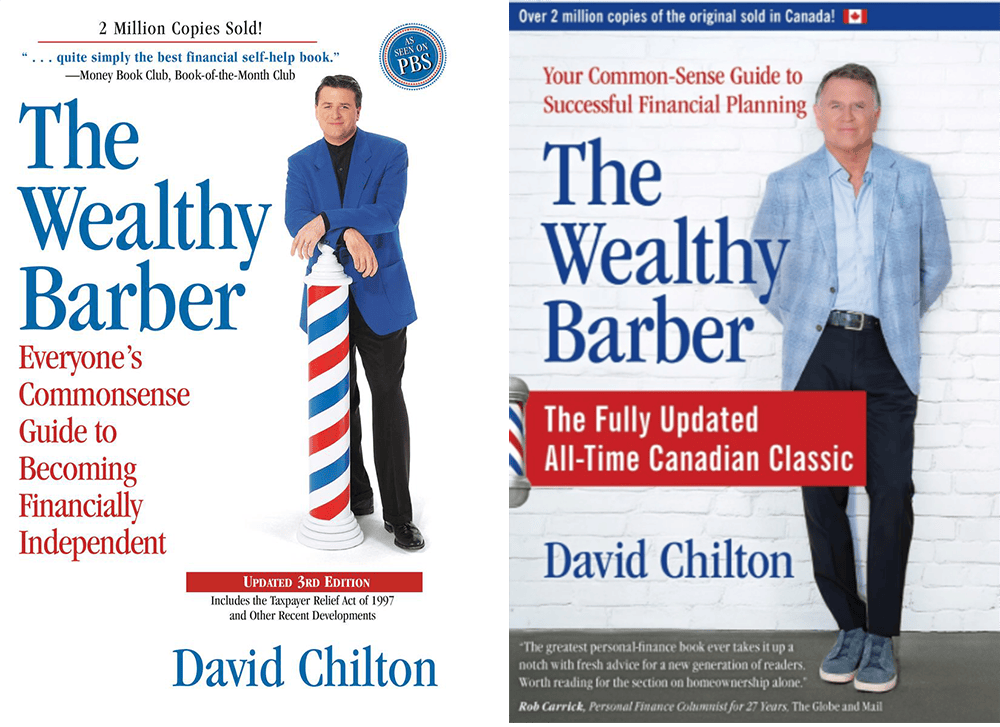
If you grew up in Canada, there is a good chance you have heard of The Wealthy Barber.
David Chilton’s Canadian personal-finance classic tells the story of ordinary people learning simple principles for building wealth from Roy, their small-town barber.
The original book was published in 1989.
More than 35 years later, Chilton released a fully updated edition of The Wealthy Barber for a very different financial world.
Among the important changes are financial tools Canadians simply didn't have when the original book was written — including the Tax-Free Savings Account (TFSA) and First Home Savings Account (FHSA).
For first-time home buyers, the FHSA in particular creates some interesting planning opportunities.
And when it is combined with the RRSP Home Buyers' Plan, the numbers can become very powerful.
A First-Time Home Buyer With $50,000 in Savings
Consider a Canadian couple planning to purchase their first home.
They have:
$50,000 saved
No house yet
A purchase planned within the next year or two
The intention of using that $50,000 toward their first home
The simplest thing they could do is leave the money sitting in a regular savings account until they are ready to buy.
But depending on their circumstances, there may be a much more tax-efficient strategy.
Instead of simply keeping the $50,000 in cash, they could potentially contribute the money into a combination of their FHSAs and RRSPs, assuming they have sufficient contribution room and meet the applicable rules.
Why?
Because eligible FHSA and RRSP contributions can generate income-tax deductions.
FHSA contributions are generally deductible, subject to the individual's available participation room, and the lifetime FHSA deduction limit is currently $40,000 per person.
Money in an RRSP may also potentially be accessed for a qualifying home purchase through the Home Buyers' Plan (HBP). The current HBP withdrawal limit is up to $60,000 per eligible person, and Canadians who qualify may use both an FHSA qualifying withdrawal and the HBP toward the same home purchase.
How $50,000 Could Potentially Create a $20,000 Tax Refund
Let's use a simplified example.
Suppose our couple is able to claim a total of $50,000 in eligible FHSA and/or RRSP deductions.
And suppose the deductions effectively save them approximately 40% in income tax.
The math looks like this:
$50,000 × 40% = approximately $20,000
That means the same $50,000 they were already planning to use toward their first home could potentially also help generate approximately a:
$20,000 TAX REFUND
The exact tax result depends on each person's taxable income, marginal tax rate, available FHSA and RRSP contribution room, timing of the contributions and withdrawals, and other personal circumstances.
But the principle is important:
The money was already intended for the home purchase. The tax planning may allow it to do another job before the purchase takes place.
Then What Should You Do With the $20,000 Tax Refund?
This is where mortgage planning enters the picture.
It would be easy to take a $20,000 tax refund and spend it.
New furniture.
A renovation.
A vacation.
A new car.
But imagine instead that the couple makes a decision before they even buy the home:
When the tax refund arrives, it is going directly against the mortgage.
Let's see what that could do.
$500,000 Mortgage Example: The Impact of a $20,000 Lump-Sum Payment
Assume the couple obtains:
Mortgage amount: $500,000
Interest rate: 4%
Amortization: 30 years
Extra mortgage payment: $20,000
Timing of prepayment: End of year 1
Future additional prepayments: None
We will also assume, simply for illustration, that the interest rate remains at 4% throughout the mortgage.
If they make the $20,000 mortgage lump-sum payment at the end of the first year and then simply continue making their normal mortgage payments, the approximate result is:
Mortgage paid off about 2 years and 1 month sooner
Instead of approximately 30 years, the mortgage would be eliminated in roughly 27 years and 11 months.
Mortgage interest savings of approximately $40,500
That single $20,000 payment made early in the mortgage reduces the principal on which future interest is calculated.
Over the remaining life of the mortgage, the approximate interest savings are:
$40,500
And remember:
They never make another additional lump-sum payment in this example.
It is simply one $20,000 payment made near the beginning of a 30-year mortgage.
How Can a $20,000 Payment Save More Than $20,000 in Interest?
This is one of the most important concepts in mortgage planning.
Mortgage interest is calculated on the outstanding mortgage balance.
When you reduce that balance early, you don't just save interest that year.
You potentially save interest:
the following year,
and the year after that,
and the year after that,
for decades.
That is why the timing of a mortgage prepayment matters so much.
A dollar of mortgage principal eliminated near the beginning of a 30-year mortgage can have substantially more impact than the same dollar paid near the end.
The Bigger Picture: $50,000 Working Much Harder
Think about the sequence.
The couple begins with:
$50,000
That money was already intended for their first home.
Through proper planning, they may be able to contribute some or all of it to eligible FHSA and RRSP accounts first.
That could potentially create approximately:
$20,000 in tax savings/refunds
They then apply that $20,000 against their mortgage early.
In our $500,000 mortgage example, that could create approximately:
$40,500 in future mortgage interest savings
So the real lesson isn't simply:
“Put $20,000 against your mortgage.”
The more interesting lesson is:
Think about how your money moves before, during and after buying your first home.
The same starting pool of savings can potentially produce a very different long-term outcome depending on how the purchase is structured.
This Is Why Mortgage Planning Should Start Before You Find a House
Most people think the mortgage process starts when they find a property.
I don't.
For first-time home buyers, some of the most valuable conversations can happen 6, 12 or even 24 months before the purchase.
Before you start seriously house hunting, we can look at questions such as:
Should you open an FHSA now?
Should your down-payment savings be sitting in cash, an FHSA, RRSP or TFSA?
How much FHSA contribution room do you have?
Does using the RRSP Home Buyers' Plan make sense for you?
What could your tax deductions look like?
Should a future tax refund be added to the down payment or applied to the mortgage after closing?
What mortgage prepayment privileges should we look for?
How much home can you comfortably afford?
What debts should be paid down before applying?
How should your credit be positioned before you need the mortgage?
A mortgage shouldn't be viewed as an isolated transaction.
It should be part of your overall financial plan.
Can You Use an FHSA and RRSP Home Buyers' Plan Together?
Yes, potentially.
Eligible first-time home buyers can make a qualifying withdrawal from an FHSA and also withdraw eligible funds from an RRSP under the Home Buyers' Plan for the same qualifying home.
That can make planning well before the purchase particularly valuable.
There are, however, specific eligibility, contribution and withdrawal rules that have to be followed.
For example, RRSP contributions made shortly before a Home Buyers' Plan withdrawal can be subject to special rules that may affect whether the contribution is deductible.
That is another reason not to wait until two weeks before closing to think about this.
Should Every First-Time Buyer Do This?
No.
This is an example of a strategy, not a recommendation for every buyer.
Whether it makes sense depends on factors including:
Your income
Your tax bracket
Your existing RRSP contribution room
Your FHSA contribution room
When you opened your FHSA
When you expect to buy
How much cash you need for closing costs and emergencies
Your mortgage terms
Your lender's prepayment privileges
Your broader investment and financial plan
You should also avoid putting so much cash into registered accounts or against a mortgage that you are left without an appropriate emergency reserve.
The purpose of planning is not to blindly follow a strategy.
It is to determine which strategy produces the best outcome for you.
Frequently Asked Questions About FHSA, RRSPs and First-Time Home Buying in Canada
What is an FHSA?
A First Home Savings Account, or FHSA, is a Canadian registered account designed to help eligible first-time home buyers save for a qualifying first home. Eligible contributions can generally be deducted from taxable income, and qualifying withdrawals to purchase a first home can be made tax-free.
How much can I contribute to an FHSA?
FHSA contribution room begins after an eligible individual opens their first FHSA. The standard annual participation amount is generally $8,000, with rules governing carryforward, and the lifetime limit is $40,000.
Can a couple each have an FHSA?
Yes. If both individuals meet the FHSA eligibility requirements, each can have their own FHSA and their own contribution room.
Can I use my RRSP to buy my first home in Canada?
Eligible buyers may withdraw funds from an RRSP under the federal Home Buyers' Plan. The current maximum HBP withdrawal is $60,000 per eligible person.
Can I use an FHSA and the RRSP Home Buyers' Plan at the same time?
Yes, provided you satisfy the applicable conditions. CRA specifically permits qualifying buyers to use an FHSA qualifying withdrawal and an HBP withdrawal for the same qualifying home.
Is an FHSA better than a TFSA for a first-time home buyer?
It depends on the individual's circumstances. One major distinction is that an eligible FHSA contribution can provide an income-tax deduction, while a TFSA contribution does not. A TFSA has other advantages, including flexibility, so the appropriate account or combination of accounts should be determined based on the buyer's circumstances.
Does making a lump-sum mortgage payment reduce interest?
Yes. A lump-sum mortgage payment reduces the outstanding principal. With the regular payment maintained, that generally means less future interest and a shorter effective amortization. The actual savings depend on the mortgage balance, rate, timing, payment frequency, mortgage terms and future rates.
Is it better to make a mortgage prepayment early?
Generally, an early prepayment has more time to reduce future interest than the same prepayment made much later in the mortgage. In the example above, a single $20,000 payment at the end of year one of a $500,000, 30-year mortgage at 4% reduces the amortization by approximately 25 months and saves approximately $40,500 in interest, assuming the rate remains unchanged.
Planning to Buy Your First Home in Canada?
If you're hoping to purchase your first home in the next 1 to 2 years and currently have money sitting in savings, don't assume the first step is browsing Realtor.ca.
The first step may be figuring out how to structure the money you already have.



.svg)


